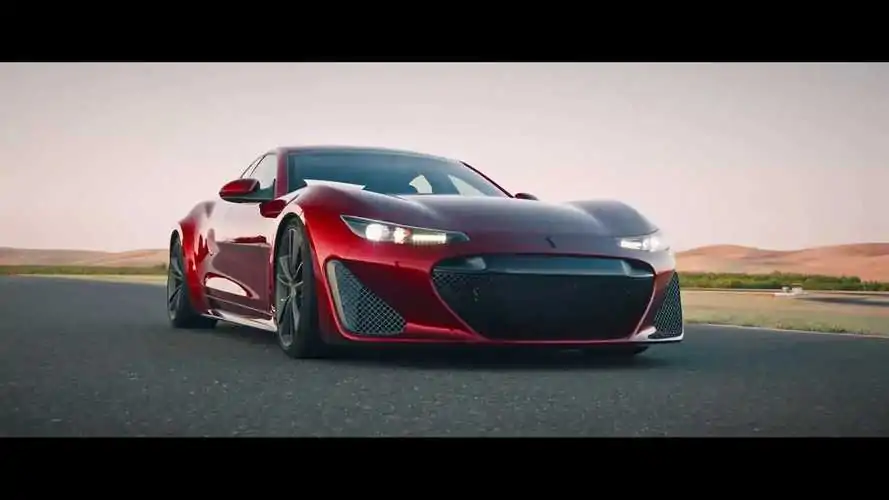
Million-dollar EVs are strange because the spec sheet often arrives before trust does. The Drako GTE entered that space with wild numbers, a four-seat cabin, and the promise that an electric supercar could feel less like a straight-line stunt and more like a serious driver’s car. For shoppers in the USA, that matters. A car this rare is not bought the way someone buys a Model S Plaid or a Porsche Taycan. You are judging the machine, the company behind it, the support network, the parts trail, and the story you will have to explain every time someone asks what it is. That is why the smarter read is not “fast or fake.” It is whether the claims match the kind of ownership life that follows. Buyers who track high-end auto news through specialty performance car coverage already know the pattern: big numbers get attention, but daily confidence comes from quieter details. The GTE’s appeal sits in that gap between theater and proof.
Drako GTE Performance Claims: The Numbers Behind the Theater
The headline figures are not subtle. Drako claimed 1,200 horsepower, four electric motors, torque sent to each wheel, and a 206 mph top speed. Those numbers place the car in a tiny club, but they also create a problem. Once power climbs past what a public road can use, the better question becomes control. A fast EV that feels nervous is a party trick. A fast EV that lets you place the nose, rotate the car, and exit cleanly is a different animal.
Why four motors change the meaning of power
A quad motor EV is not a normal all-wheel-drive car with a stronger battery. Each wheel gets its own motor, so the car can add or cut force at one corner without waiting for a mechanical differential to sort things out. That is the big idea. It sounds like a video-game feature until you picture a tight uphill corner in Southern California, where pavement grip changes from clean asphalt to dusty shoulder in one lane width.
The non-obvious part is that four motors can make a car feel calmer, not wilder. You might expect 1,200 horsepower to mean constant drama. In the right setup, the control system can reduce drama by giving the outside rear wheel more push, trimming the inside wheel, and helping the car finish the corner without a heavy steering correction.
That does not mean every claim should be swallowed whole. Wheel torque figures can sound huge because they are measured after gearing, where the number balloons. A shopper should care less about the biggest torque number and more about repeatable response. Does the car pull cleanly from 30 to 100 mph? Does it stay settled when you lift? Does the brake pedal feel the same after heat enters the system? Those answers matter more than a poster statistic.
Where top speed matters less than repeatability
The 206 mph claim gives the car bragging rights, yet few American owners will ever test it. Even private tracks with enough straightaway, safety margin, and insurance coverage are rare. So the claim works more as proof of thermal intent. If a company builds toward that speed, it must think about battery cooling, motor heat, tire load, and aero balance.
Here is the twist. A car can be built for a huge top speed and still be more interesting at 70 mph on a back road. The GTE’s best case is not that it runs away from every rival in a drag race. It is that the electric hardware gives the driver a sharper sense of rotation than a heavier gas-powered GT with one engine up front.
A real-world owner in Los Angeles, Miami, or Dallas would likely feel the car’s value during short bursts, not long flat-out runs. A freeway on-ramp, a canyon pass, or a private club track session tells you more than a number typed beside “top speed.” This is where the car’s story gets better. The loudest claim may not be the most useful one.
Owner Experience Starts Before the First Drive
A low-volume supercar asks for trust before it asks for throttle. That is hard for a new brand. Ferrari, Porsche, Lamborghini, and McLaren owners at least know where the dealer is, who can service the car, and how parts usually move. With a rare California-built EV, the owner experience begins with unanswered questions: Who picks up the car if it faults? Who updates the software? Who stocks body trim? What happens five years later?
The rare-car support question no spec sheet answers
Small production can make ownership feel special, but it also narrows the safety net. If only a handful of cars exist in the country, then every repair becomes more personal. That can be good when the factory is responsive. It can be painful when a technician, part, or software engineer is not available on your schedule.
A New York owner who keeps the car in a private garage has a different life than a Bay Area owner near the company’s orbit. Distance matters. Transport costs, enclosed shipping, diagnostic access, and insurance approvals all become part of the ownership budget. For a seven-figure EV, the repair plan should be discussed before the deposit, not after the warning light.
The counterintuitive truth is that a rare electric car may need fewer routine service visits than an exotic gas car, yet feel riskier to own. No oil changes, no clutch wear, and no exhaust heat are nice. But one locked software module or damaged carbon panel can stop the whole experience cold.
Why the cabin may matter more than the launch
The GTE was presented as a four-passenger luxury machine, not a stripped track toy. That matters because an electric supercar with rear seats has to pass a different test. It cannot survive on drama alone. The seats, visibility, noise level, trunk access, and charging routine shape whether the owner reaches for the key on a normal Saturday.
Think about a Beverly Hills owner taking friends to dinner. The car has to creep through valet traffic, clear steep driveways, manage heat, and avoid feeling like a science project. If the cabin feels hand-built in the good way, the rarity becomes charm. If small controls feel unfinished, the price becomes harder to defend.
This is where owner feedback is thin. Public first drives give hints, but they do not equal years of garage life. A buyer should treat the available impressions as a starting point. The smarter move is to ask for service records, software history, charging details, tire specs, and direct factory support terms. The romance is easy. Paperwork protects the romance.
Comparing the Electric Supercar to Familiar High-Dollar Rivals
The GTE sits in an odd lane. It is not a common luxury EV, not a traditional hypercar, and not a factory-backed track weapon from an old European name. That makes direct comparison messy. A Tesla can embarrass many cars in a straight line for less money. A Taycan gives deep dealer support. A Rimac offers a more known electric hypercar story. The GTE answers with rarity, four doors, and a focus on wheel-by-wheel control.
Why price changes the standard of proof
At this level, “fast” is not enough. A six-figure EV can be forgiven for a few rough edges because the value case still works. A seven-figure car gets judged by a harsher rule. Every panel gap, steering reaction, brake feel, screen response, and support promise becomes part of the price.
The electric supercar market has trained buyers to expect wild acceleration. That weakens the GTE’s biggest headline. When a family sedan can launch hard enough to make passengers laugh, a million-dollar car must offer something more layered. It needs steering feel, chassis trust, theater, rarity, and a service story that does not scare the owner.
The surprise is that the GTE’s four-door layout may help it. Many ultra-fast EVs chase spaceship drama. This one carries a long, low sedan shape with room for adults. Some buyers will see that as old platform baggage. Others will see it as a grand touring advantage. A supercar you can share with three passengers has a different emotional pull.
The role of charging in a car built for speed
Charging sounds boring until you own the car. Then it becomes part of every plan. A 90 kWh-class battery and DC fast-charging capability can make short trips easy, but connector type, charging curve, station access, and parking layout matter in the USA. The U.S. Department of Energy charging guidance is a useful baseline for understanding how public fast charging differs from home charging.
A private owner in Phoenix may install a strong home setup and rarely think about public stations. A collector in Chicago who stores the car through winter has another concern: battery care during long rests. A Miami owner may worry more about heat, tire age, and valet damage than range. Same car. Different headaches.
The hidden point is that high-performance EV ownership often rewards boring habits. Keep the battery in a healthy window. Pre-plan charging near private roads or events. Watch tire load ratings. Avoid using maximum acceleration as a party trick when the battery is hot or low. That is not dull. That is how expensive machines stay enjoyable.
What a Smart Buyer Should Verify Before Taking the Leap
The GTE is the kind of car that can make sense to the right buyer and no sense to everyone else. That is not an insult. Rare cars work that way. The best owner is not chasing the cheapest speed. They want a low-volume American EV with a strange backstory, huge power, and enough usability to bring friends along. Still, desire needs a checklist.
Documents that matter more than the brochure
Start with build documentation. You want the original sales paperwork, options list, service notes, software update history, charging hardware details, and any factory communication. If the seller cannot produce a clean trail, pause. A rare car without records is not mysterious in a fun way. It is a future argument.
Next, inspect the tires, brakes, suspension, and battery behavior. A low-mile exotic can still be abused through repeated launches or track heat. Look for uneven tire wear, brake vibration, coolant service notes, and warning history. A professional inspection should include EV diagnostic review, not a casual walkaround by someone who only knows gas exotics.
For insurance, speak to a specialty carrier before purchase. Agreed-value coverage, transport coverage, parts sourcing, and repair-shop approval matter. The wrong policy can turn a small incident into months of dispute. That is true for any rare supercar, but it hits harder when the car’s support network is narrow.
When the car makes sense and when it does not
The GTE makes sense for a collector who already owns other cars, has indoor charging, accepts factory-dependent support, and wants something people will not see at every Cars & Coffee. It also makes sense for someone who values engineering weirdness. Four motors, a low production run, and a grand touring shell create a story you cannot buy from a normal showroom.
It makes less sense as a single dream car. If you need dealer access in every major city, proven resale depth, and easy parts supply, a more common high-end EV or gas exotic will feel safer. There is no shame in that. Peace of mind is part of performance when the bill is this large.
The best way to judge it is to separate collector value from driving value. Collector value comes from rarity, brand story, condition, and documentation. Driving value comes from response, comfort, support, and your willingness to live with unknowns. When both line up, the car becomes tempting. When only one lines up, be careful.
Conclusion
The GTE is not a normal used exotic with an electric drivetrain. It is a small-run statement car from a young brand, and that makes it both exciting and hard to judge. The performance claims are bold, but the more useful test is whether the hardware creates control you can feel outside a launch video. That is where the quad motor EV idea has real bite. It promises not only speed, but cleaner corner exits and a calmer hand on rough pavement. Still, Drako GTE should be approached with a collector’s patience, not a bargain hunter’s hunger. Ask for records. Confirm support. Study charging needs. Price the insurance before the emotional part takes over. If you want easy ownership, choose the safer badge. If you want a rare American electric GT with a strange pulse and a serious story, this car deserves a closer look. Buy the proof, not the promise.
Frequently Asked Questions
How fast is the Drako electric super sedan supposed to be?
The company claimed 1,200 horsepower and a 206 mph top speed. Those figures put it near the top of the EV performance world, but real ownership value depends more on traction control, cooling, brakes, tire condition, and repeatable response than one peak number.
Is the GTE a good car for daily driving in the USA?
It can work for limited daily use if the owner has secure parking, home charging, and access to proper support. Still, it is better treated as a collector-grade performance car than a normal commuter EV. Rare parts and service logistics change the math.
What makes the quad motor EV layout special?
Each wheel can receive power on its own, which gives the control system more freedom than a normal all-wheel-drive setup. In theory, that can improve corner exit, stability, and driver confidence because the car can fine-tune torque at each corner.
Is the owner experience well documented?
Public information is limited because production was planned in tiny numbers. First drives, public appearances, and reported sightings give some clues, but they do not replace long-term owner records. A buyer should request direct documentation from the seller and factory where possible.
How should a buyer inspect one before purchase?
Use an EV-aware exotic specialist. Check software history, battery behavior, cooling systems, suspension, brake wear, tire age, charging hardware, and body condition. Also confirm whether the factory or a qualified shop can support the car near your location.
Does the car compete with Tesla or Porsche EVs?
Only in a loose sense. A Tesla or Porsche offers broader service access and stronger market depth. This car competes more as a rare collector EV with extreme power, four seats, and an unusual engineering story. The buyer profile is different.
What is the biggest ownership risk?
Support depth is the main concern. A rare EV can be easy to enjoy when healthy, yet hard to repair when a unique part, software issue, or body component becomes a problem. Documentation and factory communication matter more than mileage alone.
Is it worth buying as a collectible electric supercar?
It can be worth considering for a collector who accepts risk, values rarity, and has other cars available. It is not the safest route to EV speed. Its appeal comes from scarcity, design, four-motor hardware, and the story behind owning something few people will ever see.