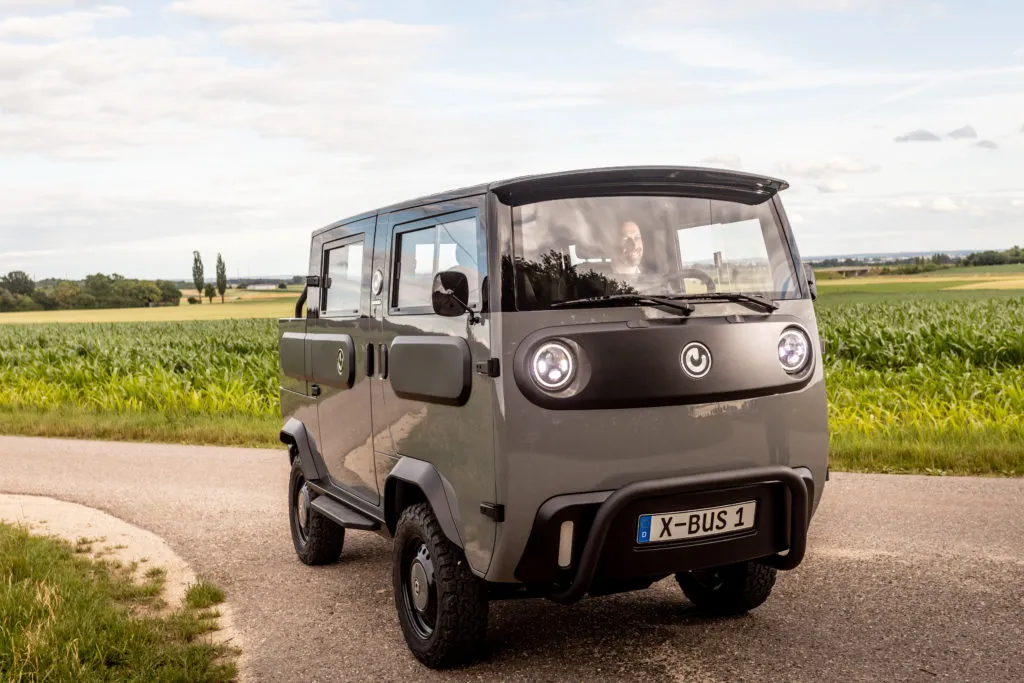
Most tiny EV concepts look fun until you ask them to do boring work on a Tuesday morning. The electric modular van idea behind the XBUS was different because it was built around switching jobs, not showing off. One week it could serve as a compact cargo carrier. Another week, with the right rear module, it could become a camper, pickup, passenger shuttle, or trade van. For American readers watching European micro-mobility from a distance, that flexibility is the whole story. It also explains why sites covering practical vehicle trends, local business visibility, and market shifts, such as automotive business coverage, keep circling back to small EVs that solve narrow daily problems instead of chasing highway drama.
The catch is plain. XBUS was not a normal U.S. van, and its maker ran into serious business trouble before the vehicle became a proven choice. That does not make the concept useless. It makes the real-world question sharper: which use cases would reward this kind of design, and which would punish it?
What XBUS Configurations Actually Changed
XBUS configurations were never meant to be trim packages in the usual car-buyer sense. A trim package gives you nicer seats, a bigger screen, or different wheels. This setup aimed at something closer to a tool chest on wheels. The same core vehicle could wear different rear sections depending on the job. That sounds simple, but it changes how you think about ownership. You are no longer buying one fixed shape. You are buying a base that can be asked to live several lives.
Why XBUS configurations were more than trim levels
The most useful versions were the plain ones. CargoBox made sense for last-mile delivery, small parts runs, and maintenance teams that needed enclosed space. Universal worked for trades because flat sides could carry a company name, while the rear area could hold tools, bins, and materials. Pickup and Tipper versions pushed the same platform toward landscaping, groundskeeping, and light property work.
That matters in the U.S. because many local jobs do not need a full-size van. A property manager in Tempe checking five apartment buildings may carry filters, door hardware, paint supplies, and a ladder. A Ford Transit or Chevy Express can do that, but it also brings more size, more tire cost, more parking friction, and more empty air.
The non-obvious part is that the smallest work vehicle is not always the cheapest one. A tiny platform can become expensive if it needs special parts, odd tires, rare body panels, or a service network nobody nearby understands. For a business, downtime is a cost. Cute does not fix a locked gate, a broken sink, or a missed delivery window.
How a modular EV van changes ownership math
A modular EV van is strongest when the same buyer has seasonal needs. Think of a parks department in a coastal town. In spring, it needs a small utility bed for planting crews. In summer, it needs a service vehicle for beach trash bins and boardwalk repairs. In fall, it may need a covered cargo setup for event gear. One base vehicle serving more than one role can sound like smart spending.
Yet the module system only works if changing modules is easy enough to happen in normal life. A swap that needs a shop lift, three workers, and half a day becomes theory. A swap that two trained staff members can handle with basic tools becomes useful. That difference decides whether the whole idea earns its keep.
There is also a storage problem people skip. Spare modules need dry space. A small business that parks behind a storefront may not have room for a camper module, a box module, and a flatbed section. The vehicle saves curb space, then asks for warehouse space. That is a trade, not a flaw.
The Use Cases That Fit a Light Electric Vehicle
A light electric vehicle lives best where speed, range, and payload needs stay predictable. The XBUS concept was never about beating a big van across Texas. It was about short routes, light loads, tight streets, and frequent stops. That makes it more useful for neighborhoods, campuses, resorts, downtown service zones, and planned communities than for interstate work.
Local delivery and campus work without van-size waste
Picture a small bakery in Charleston delivering bread to six cafés before lunch. The route is short. The cargo is bulky but not heavy. Parking matters more than horsepower. In that setting, a compact enclosed module makes sense. The driver can pull near the curb, unload fast, and return before the battery story becomes stressful.
Campus fleets are another strong match. Universities, hospitals, theme parks, and retirement communities already use carts, small utility vehicles, and compact service rigs. A light electric vehicle with a proper enclosed cab and changeable body could sit between a golf cart and a full van. That gap is real.
The counterintuitive insight is that range is not the first question for these users. Route control is. If a vehicle sleeps at the same depot every night, runs known loops, and never sees highway speeds, a modest battery can work fine. The wrong buyer worries about a 400-mile road trip. The right buyer asks whether the vehicle can finish Tuesday’s route without blocking traffic.
Why the camper made the strongest emotional case
The camper version drew attention because it made the XBUS feel personal. A small pop-up roof, sleeping space for two, a compact kitchen, fresh water, and solar panels create a strong weekend image. You can see it at a state park in Oregon, a beach lot in North Carolina, or a desert campsite outside Joshua Tree.
But the camper is also where the dream needs the most discipline. Small campers are not tiny hotels. They are weather, storage, charging, bedding, cooking, and bathroom trade-offs packed into one shell. A couple used to a Sprinter build may find it too tight. A solo traveler who wants quiet weekends within two hours of home may find the concept close to perfect.
The best camper use case is not cross-country van life. It is low-mileage escape. Leave Friday after work, drive to a nearby campground, run lights and a fridge from the battery, sleep inside, and come home Sunday. That pattern fits the machine better than forcing it into a road-trip role it was not built to play.
Why the electric modular van idea still matters after the hype
The failure of a company does not always kill the value of an idea. The electric modular van concept still points at a problem American roads have not solved well: too many daily jobs are handled by vehicles larger than the work demands. Big vans are useful, but they are often used as rolling closets. In crowded cities, that size creates parking stress, curb fights, and wasted energy.
The U.S. legal question buyers cannot ignore
For American buyers, the legal side would matter as much as the body style. European L7e rules do not carry over neatly to U.S. roads. The U.S. has its own low-speed vehicle category, and Federal Motor Vehicle Safety Standard No. 500 limits that class in ways that would not match a faster European microvan without changes.
That means a U.S. fleet could not assume a European-spec XBUS would be street legal in the same way as a normal commercial van. It would need federal compliance, state registration clarity, insurance support, and parts availability. Those are not tiny details. They decide whether a vehicle is an asset or a headache.
Here is the quiet truth: a slow legal classification can be more useful than a fast claim. A vehicle limited to low-speed streets may work well inside a resort, warehouse park, college campus, or master-planned community. It may fail as a citywide delivery van in Houston or Atlanta. Legal limits create the map.
What fleets should learn before trusting a prototype
Fleet buyers should treat the XBUS story as a lesson in proof. A clever prototype can answer design questions, but it does not answer supply questions. Who fixes it after a crash? Who stocks glass, body latches, brake parts, battery modules, seals, tires, and software tools? Who honors a warranty if the maker changes course?
A small plumbing company in Ohio cannot afford to be a beta tester unless the savings are huge and the fallback plan is clear. If one van goes down, someone still has to reach the customer. That is why established brands win boring fleet contracts. They may be less charming, but they answer the phone.
The better path for future makers is narrow launch design. Start with one city, one service network, one body style, and one user group. Prove the dull stuff. Then add modules. When a company tries to sell a bus, pickup, camper, cargo box, and off-road lifestyle machine at once, the idea can outrun the factory.
Real-World Matchups: Who Would Benefit and Who Would Not
The most honest way to judge the XBUS idea is to stop asking whether it is cool. It is. That part is settled. The better question is whether a buyer’s daily pattern makes the shape useful. Some people would gain from a compact changeable platform. Others would buy frustration with a friendly face.
Best-fit users for a modular EV van
The best-fit buyer has short routes, light-to-medium cargo, predictable parking, and a home base for charging. That could be a city maintenance crew, a local florist, a mobile pet groomer with a tight service radius, or a beach-town rental company moving towels, signs, and small equipment between properties. Each job needs movement more than speed.
A modular EV van could also work for marketing teams. A coffee brand might use a pickup or box body for weekend pop-ups. A real estate office in a resort town might use a passenger layout for local tours, then swap to cargo for event setup. The vehicle becomes part transport, part billboard.
Still, the buyer must price the whole system, not the base. Modules, storage, insurance, training, charging, and service access all belong in the math. A cheap base with expensive support is not cheap. The strongest buyer is the one that can use the same platform often enough to make the extra pieces pay rent.
Poor-fit users who need a normal commercial van
A highway contractor should walk away. So should a courier crossing metro areas at 65 mph, a family wanting one do-everything road-trip car, or a tradesperson carrying heavy gear over long distances. Those buyers need crash-tested highway vehicles, broad dealer networks, and easy replacement parts. Romance is not a work plan.
Cold-weather buyers should be careful too. Small batteries lose comfort margin when heat, hills, payload, and headwinds stack up. A compact EV that feels ideal in San Diego may feel strained in rural Minnesota. The issue is not only range. It is confidence.
That does not make the XBUS concept weak. It makes it specific. A table saw is not bad because it cannot replace a pickup. A compact modular vehicle is not bad because it cannot replace an E-Transit. The problem starts when marketing asks one machine to be every machine.
Conclusion
XBUS earned attention because it asked a better question than most small EV concepts. Instead of chasing size, speed, and status, it asked how many daily jobs could be handled by a lighter, more changeable vehicle. That question still deserves attention, even if the original business story became messy.
For U.S. readers, the safest view is practical rather than sentimental. The electric modular van idea works best in controlled local use, where routes are short, parking is tight, and one base vehicle can serve more than one task. It works poorly when buyers expect highway freedom, easy nationwide repairs, or full-size van strength.
Future builders should borrow the best part of the XBUS idea and drop the noisy promises. Start with one work-ready version. Prove parts supply. Prove service. Prove legal fit. Then let the modules grow from real demand.
For more buying context, compare this with small EV ownership costs and commercial van buying mistakes before chasing any new microvan concept.
Frequently Asked Questions
Is the XBUS available to buy in the United States?
No regular U.S. retail path has been proven for buyers. The vehicle was designed around European light-vehicle rules, and the maker faced insolvency. American buyers should treat used listings, deposits, or import claims with caution unless legal registration and parts support are documented.
What were the main XBUS body configurations?
The best-known versions included cargo box, universal van, pickup, tipper, bus, open body, and camper layouts. The appeal came from swapping rear modules rather than buying separate vehicles for every task. That idea made the platform feel more like equipment than a fixed car.
Would an XBUS camper work for long road trips?
It would fit short weekend trips better than long interstate travel. The compact sleeping area, small kitchen setup, and limited highway suitability point toward nearby campgrounds, beach stays, and local outdoor breaks. Cross-country van life would demand more space, speed, and support.
Is a modular EV van cheaper than a normal van?
Sometimes, but only when the owner uses several modules often enough to justify the added cost. A normal van may be cheaper for one fixed job. A changeable platform makes more sense when one business has repeating seasonal or mixed-use needs.
What kind of business would use an XBUS-style vehicle well?
Local delivery, campus maintenance, resort operations, parks departments, florists, mobile vendors, and property managers are strong matches. These users often run short routes, carry modest cargo, park in tight areas, and return to a home base where charging is simple.
Why did people compare XBUS to a micro camper or tiny truck?
Its shape and module system made it feel like several tiny vehicles in one. Depending on the rear body, it could look like a camper, pickup, van, or shuttle. That visual flexibility helped it gain attention beyond normal EV circles.
Could XBUS work as a family car?
It would not be a good main family car for most American households. Speed limits, crash-rule differences, limited service support, and cargo compromises would make it less practical than a normal compact EV or minivan. It fits task-based use better.
What should buyers learn from the XBUS story?
A smart vehicle concept still needs production, service, legal approval, parts, and warranty support. Buyers should never judge a new EV only by range claims or clever design. The boring support system decides whether the vehicle works after the first month.