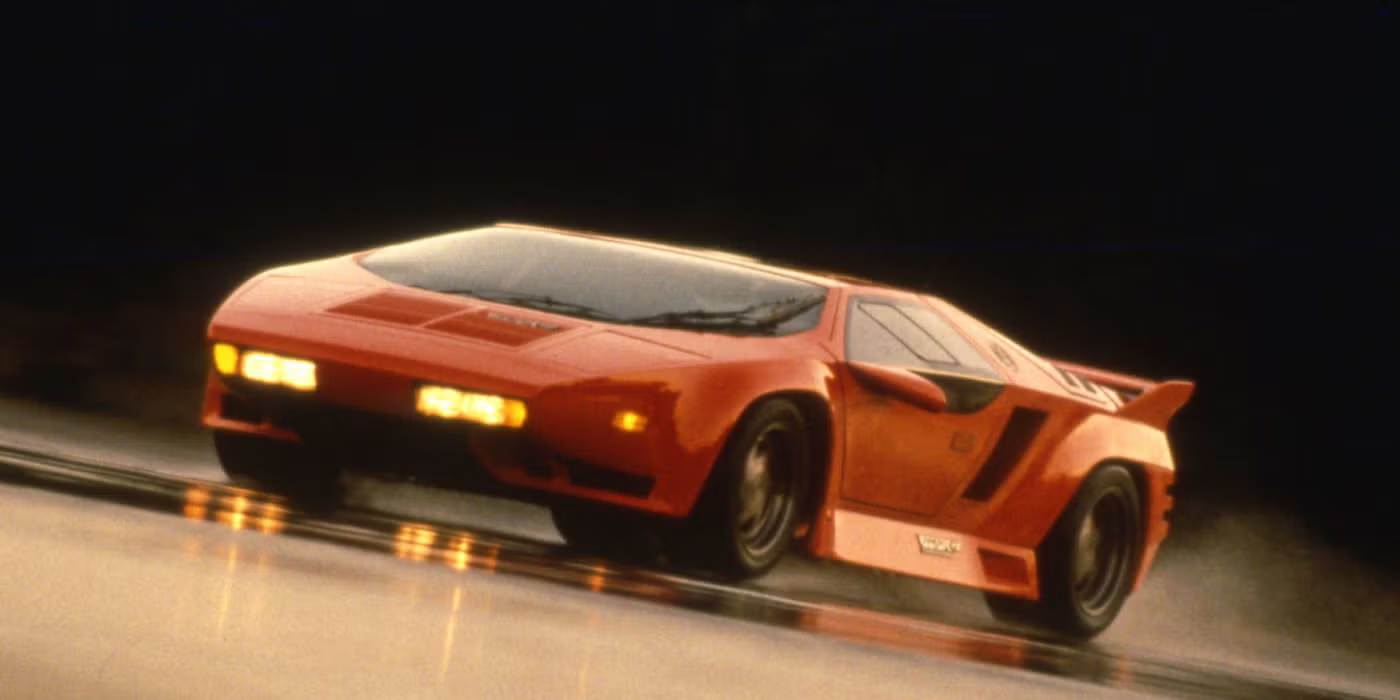
Some cars fail because nobody cared enough to make them bold. This one had the opposite problem. The Vector W8 arrived with a fighter-jet cabin, wild claims, aerospace-style construction, and the nerve to challenge Europe from California. Yet the same ambition that made it unforgettable also fed the mechanical problems that still define its reputation. For American readers who love rare exotics, the story is not “fast car breaks.” It is stranger than that. A tiny company tried to build a hand-made supercar around race hardware, old Detroit parts, heat, boost, and huge public promises. That mix can work on a track special. On a street car, it asks for patience, money, and ruthless testing. Owners today face a different question than buyers did in 1991: not whether the car was ahead of its time, but whether its weak points can be managed. If you study rare vehicle ownership guides, the lesson is clear. The scariest failures are often the ones built into the original idea.
Why Vector W8 Mechanical Problems Became Part of the Legend
The W8 was not a normal American supercar with a strange body. It was a low-volume machine built around a huge promise: aerospace thinking for the road. That promise sounded thrilling, but it also raised the cost of each mistake. A Corvette or Mustang could hide small flaws through dealer networks, parts stock, and mass testing. This car had none of that safety net. When something failed, it became part of the myth.
Small production made each flaw louder
Only a small number of customer cars reached private hands, which meant the sample size was tiny. In mass-market cars, one bad water pump story disappears among thousands of normal owners. In a car this rare, one public breakdown feels like a verdict. That is not fair, but rare-car history has never been fair.
The famous press-car trouble mattered because the W8 had already been sold as more than a car. It was sold as proof that a California company could out-think Ferrari and Lamborghini. When journalists ran into overheating and gearbox issues, the story hit harder than it would have on a cheaper machine. The car’s image had no cushion.
The counterintuitive part is that rarity can make a car seem worse and better at the same time. Fewer examples mean fewer failures in raw numbers. Yet each failure carries more weight. That is why the same machine can be praised by one outlet, attacked by another, and still become a million-dollar poster car decades later.
Aerospace thinking met street-car boredom
The cabin looked like a cockpit, and the construction borrowed ideas from aircraft and race shops. That gave the W8 its identity. It also created a mismatch. Aircraft-style thinking works when inspection schedules are strict and trained people touch the machine often. Street cars live through traffic, heat soak, weak batteries, old fuel, and owners who want to turn a key and go.
That gap matters. A twin-turbo V8 in a tight mid-engine bay does not care how dramatic the dashboard looks. It wants cooling air, clean oil, careful routing, strong insulation, and calm electrical behavior. The W8 asked each system to act mature before the company had time to make it ordinary.
A good real-world example is simple stop-and-go driving in Southern California. A car can look perfect at a concours, start clean, and idle with pride. Then the fan cycle, cabin heat, fuel pressure, and transmission temperature all climb together near a freeway on-ramp. That is where exotic design meets daily use. The car either manages heat quietly, or the owner learns fast.
Heat, Packaging, and the Twin-Turbo V8 Burden
The W8’s powertrain was the heart of the dream and the source of much of the stress. The Rodeck V8 gave the car real muscle, not paper-only glamour. Add boost, intercooling, a dry-sump layout, and a low body, and you get a machine that sounds serious even now. The problem was not that the engine idea was weak. The problem was that the supporting systems had no room for casual errors.
The engine bay punished lazy heat control
A mid-engine layout sounds exotic because it puts mass near the center of the car. It also traps heat behind the seats. In the W8, that heat came from a twin-turbo V8, exhaust plumbing, intercooler hardware, oil lines, and a body shaped more for drama than easy service. A turbo car does not create heat in one tidy place. It spreads it through metal, air, hoses, wiring, insulation, and the cabin wall.
That is why burned trim and heat complaints became part of the car’s lore. The lesson is not that the engine was doomed. It is that heat control is a system, not a part. You can wrap exhaust, improve shielding, service fans, and check coolant flow, but the work has to be done as one plan.
The non-obvious issue is parked heat. Many owners worry about full-throttle pulls, but the worst moment may come after the engine shuts off. Airflow stops. Heat rises. Rubber, carpet backing, connectors, and fuel-related parts sit in a hot pocket. On a rare car that may sit for months, one short drive can stress old materials more than a hard highway run.
Boost made small faults feel dramatic
Turbocharging turns small problems into loud ones. A minor vacuum leak can upset drivability. A weak ignition part can feel like engine failure under load. Old fuel can make a strong motor act sick. The W8’s power number was part of the sales pitch, but boost also made diagnosis less forgiving.
Owners who treat the car like an old small-block with fancy bodywork miss the point. The Rodeck V8 may share spirit with American racing hardware, but the installed package is not backyard-simple. Oil condition, turbo health, fuel delivery, charge-air plumbing, and cooling capacity all matter before anyone asks for full power.
Here is the practical read. A modern owner should care less about chasing peak output and more about making the first 20 minutes stable. Does coolant temperature climb at idle? Do fans come in on time? Does the cabin smell hot? Does oil pressure stay calm once warm? A car that passes those boring tests is closer to safe enjoyment than one that only sounds healthy during a cold start.
The GM Three-Speed Automatic Was Both Clever and Exposed
The gearbox choice still makes people argue. On paper, a GM three-speed automatic behind a wild exotic sounds crude. In context, it was more clever than critics admit. It gave the company a known base part with torque capacity and American service roots. Yet it also became one of the easiest parts to blame when the car’s promise met road-test abuse.
The transmission solved one problem and created another
A small company building an American supercar had to pick battles. Designing a fresh manual transaxle for huge torque would have burned money and time. A modified GM three-speed automatic offered a path. It was known, stout in the right use, and easier to source than a one-off gearbox from nowhere.
Still, strength is not the same as fit. Gear spacing, heat load, shift behavior, and final drive feel shape the whole car. The W8 had massive torque, but a three-speed setup could make the engine feel either explosive or oddly trapped, depending on speed and conditions. The car could be fast and still feel mechanically busy.
A concrete example is a roll race against a manual rival from the same era. The W8 might have more power, but the other car can sit in a better gear and respond faster. That does not mean the W8 is weak. It means the transmission choice changed how power reached the ground.
Heat and calibration mattered more than badge pride
Transmission trouble in an exotic often gets blamed on the part itself. That can be too easy. In a tight mid-engine car, fluid temperature, cooler placement, line routing, torque converter behavior, and shift calibration all decide whether the gearbox lives. The badge on the case is only one part of the story.
The GM three-speed automatic needed the same care as the engine: clean fluid, sane temperatures, correct adjustment, and no heroic abuse before warm-up. A rough shift or delayed engagement should not be waved away as “old car character.” On a W8, it may be the first polite warning before an expensive repair.
The strange insight is that the automatic may have helped the car survive. A manual gearbox could have added clutch shock, missed shifts, and more development work. The automatic limited some driver abuse. It also limited the car’s image. Buyers wanted a jet. Some got a jet with an old-school American gearbox doing the hardest job in the room.
What Owners Should Inspect Before Driving or Buying One
By now, the W8 is not a new exotic with warranty drama. It is a historic machine, and that changes the inspection mindset. The goal is not to find a flawless car. That may not exist in the way modern buyers imagine. The goal is to find a car with known issues, careful records, and no hidden heat, fuel, or transmission problem waiting to become a headline.
Start with temperature, fluids, and records
A pre-purchase inspection should begin before the engine starts. Look for heat damage near the rear bulkhead, exhaust paths, turbo plumbing, and lower body areas. Check hose age, clamp quality, wiring insulation, fluid stains, and signs of rushed repair. The prettiest paint in the room will not save a car with cooked lines behind the cabin.
Once running, watch behavior instead of listening to claims. A healthy rare exotic should settle into a pattern. Temperatures should rise in a controlled way. Fans should cycle. Fuel smell should not hang around. The gearbox should engage without drama. The twin-turbo V8 should not need excuses before it behaves.
Records matter because owners become part of the engineering chain. On a car this rare, the best upgrades may be invisible: better shielding, improved routing, cooling fixes, refreshed connectors, or careful fuel-system work. That is why classic supercar maintenance costs should be studied before a buyer falls in love with the shape.
Treat parts supply as a mechanical risk
Parts availability is not separate from reliability. If a normal car breaks a fan relay, you order one and move on. If a W8 needs a special trim piece, custom cooling repair, or expert transmission work, the downtime can become the real cost. A car that cannot be serviced becomes fragile even when nothing is broken today.
This is where American roots help. The Rodeck V8 and GM three-speed automatic give specialists something to work with. That does not make the car cheap to maintain, but it means skilled U.S. shops are not starting from a blank page. The hard part is finding people who respect both sides of the car: the race-bred hardware and the hand-built exotic body.
Before purchase, a buyer should also check title history, recall databases, and any known service campaigns tied to the VIN. The NHTSA recall lookup is a smart first stop, though rare specialty cars may not show the same depth of data as mass-market models. Pair that with used exotic car inspection checklist planning and a specialist who has no reason to flatter the seller.
Conclusion
The W8 deserves better than a lazy punchline. It was not a simple lemon, and it was not a perfect lost hero. It was a brave machine built by a small team that pushed too many hard systems into one low-volume car. That is why the mechanical problems still matter. They reveal the cost of ambition before the support network exists. The Vector W8 now sits in a strange place: more respected than it was during its worst press moments, yet still demanding enough to punish careless ownership. For collectors, the smart move is not fear. It is discipline. Buy the story, but inspect the heat control. Admire the cockpit, but test the cooling fans. Love the boost, but service the boring parts first. The car’s future will belong to owners who understand that preservation is not storage. It is active care. Treat the machine that way, and the legend finally gets room to breathe.
Frequently Asked Questions
How much does it cost to repair a W8 today?
Costs vary because many repairs depend on custom labor, rare parts, and specialist knowledge. Basic service may be manageable through American racing and transmission shops, but heat damage, body repair, turbo work, or wiring faults can climb fast. A buyer should budget like an exotic owner, not a Corvette owner.
Is the W8 reliable enough to drive on weekends?
It can be driven, but only with careful preparation. The car needs fresh fluids, stable cooling, strong battery health, clean fuel delivery, and a patient warm-up routine. Weekend use is safest when the owner treats each drive as a monitored event, not casual transportation.
What was the most common failure area on the car?
Heat-related trouble sits near the top of the list because it can affect trim, wiring, hoses, fluids, and drivability at once. Transmission complaints also shaped the car’s public reputation. In practice, both areas connect because heat can hurt the gearbox as well as the engine bay.
Why did the car use an automatic transmission?
The automatic gave Vector a strong known base for handling high torque without creating a new transaxle from scratch. That choice saved development strain, but it also shaped the driving feel. Some buyers expected a more exotic manual experience, which made the gearbox an easy target.
Are parts impossible to find for this rare supercar?
Not impossible, but never simple. Some mechanical pieces connect to American racing or GM roots, which helps. Body, trim, cockpit, and model-specific hardware are harder. Good ownership depends on patient sourcing, skilled fabrication, and a shop that understands low-volume exotic construction.
What should buyers inspect first before purchase?
Start with heat damage, cooling behavior, transmission engagement, fuel smell, wiring condition, hose age, and service records. A cold-start video is not enough. The car should be inspected warm, at idle, and after a careful road test by someone who knows rare performance cars.
Did press coverage hurt the car’s reputation?
Yes, because public test problems clashed with huge performance claims. One poor test story carried extra force because so few cars existed. At the same time, other period coverage praised the car’s speed and drama, which is why the reputation remains split rather than settled.
Is it worth buying one as a collector car?
It can be worth buying for a collector who values rarity, American supercar history, and mechanical involvement. It is a poor choice for someone who wants easy ownership. The best buyer accepts the car’s flaws as part of the job, not as surprises.